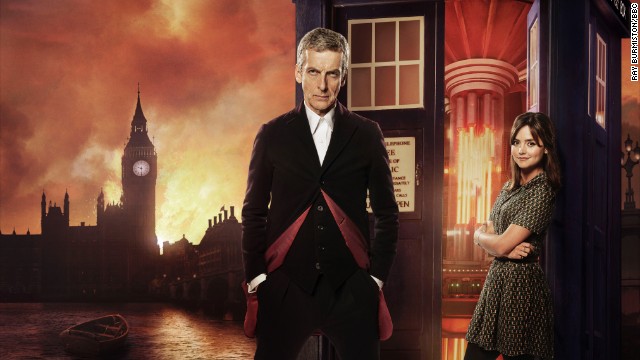
Doctor Who takes place in a different world than our own: It’s fictional obviously, but it doesn’t even bother to try to imitate the norms of the audience’s reality. This is a world where everyone speaks in impassioned monologues, in desperate pleas for help or hope, in ominous warnings. Melodrama is a key component of this world, and for the most part, the people who love this world embrace the melodrama.
But after this series’ two part finale, which concluded this past weekend, I felt a doubt about this accepted fact of Doctor Who, a doubt that I’ve never felt before. A doubt that said, for the first time, maybe it’s time for the Doctor to retire. (Spoilers ahead).
I enjoyed the first part, which aired two weeks ago. The opener was unexpected, a jolt of electricity in an otherwise stagnant plot line between the two romantic leads. And it was hopelessly sad too, a real throwback to the days of Donna type sad, a tone that I have missed on the show lately. The afterlife plot line caught my attention, and surprise! held it because it did that thing that Doctor Who is so good at: it asked a really big question about life, an unanswerable one – what happens when we die? – on a small, personal scale: Was Danny Pink really, truly dead?

But towards the end of the episode and into the second part, it fell apart. The RETURN OF THE CYBERMEN plot line is tired – I really think the writers have squeezed everything out of this particular villain that they can. And they couldn’t even commit to their evilness! The writers established over eight seasons that the Cybermen are obedient and emotionless killers and then quickly reversed all that work over the course of 45 minutes. That just doesn’t cut it guys. I’m not buying it. The shadow of an explanation that the writers do give – that by downloading a dead person’s consciousness into the body of a robot, Missy suffered the unexpected consequence of her new army harboring old feelings from their literal past lives – is interesting. But this is the ongoing issue with the new season: it all comes to head in a five minute sequence. In this case it was, in the first thirty seconds, quite powerful – As Danny takes off the Cyberman mask and reveals himself to Clara, I really felt her loss, and knew he was gone – but then it begins to deflate once the plot begins to explain itself via character exposition (exposition that didn’t really answer any of my questions clearly; I literally went on Wikipedia after I watched to read the plot summary just in case I missed something crucial).
Here’s where my point about melodrama comes in: After I watched the finale, I switched to Netflix to watch a couple of early David Tennant episodes as a palate cleanser, which are just as shouty and emotional as this new series, to try to figure out why I used to so readily accept the tone of the show, but can’t bring myself to do it anymore.
Here’s what I came up with: In the early and mid-2000’s, the world had a distinctly cheesy tone. Angel. Boy bands. This obvious masterpiece. But the tone of entertainment, for better or worse, has clearly changed, and the new series of Doctor Who did not change with it. There are some aspects of the show that fundamentally should carry over to new seasons (though that’s for a different essay) but the show should give itself room to evolve. Instead of creating their own universe to house Capaldi’s otherwise genius Doctor, this new series relies on what was good about the past series – Tennant’s high-stakes, always in a hurry, always just about to die brand of melodrama (Matt Smith has his unmatched goofiness and Amy and Rory to play off) – and it’s just not working. It’s unfair to the fans and frustrating to watch such a fantastic actor work with such lame material. I don’t want to see Peter Capaldi go, but unless the writers can create his own unique world to live in, and not one copy-pasted from the past, then it might be his, you know, time.
Let me know what you thought of the finale in the comments!
Image: Ray Burmiston/BBC
 Smart Girls love SciFi